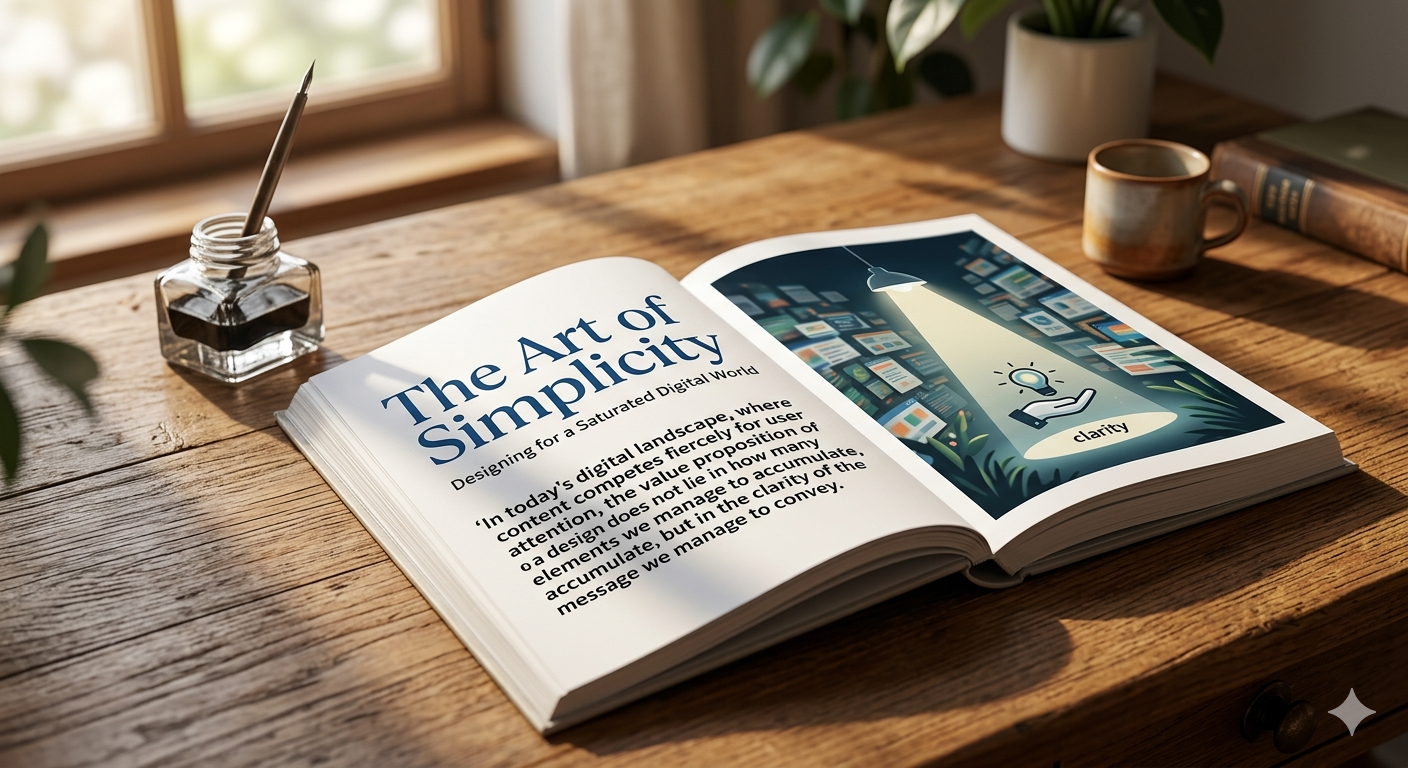

In today’s digital landscape, where content competes fiercely for user attention, the value proposition of a design does not lie in how many elements we manage to accumulate, but in the clarity of the message we manage to convey.
Less is more: Minimalist aesthetics as a strategy
For those of us working on managing brand identities and digital assets, the key to standing out is visual coherence. A minimalist design does not just offer a breather to the viewer; it elevates the perception of quality.
- Contrast and typography: Using white backgrounds with black typography remains the gold standard for a premium, modern aesthetic.
- Visual hierarchy: By prioritizing elements, we allow the user to focus their attention on what truly matters, improving the user experience (UX).
The intersection of UX/UI and content
Creating interfaces is not just a matter of aesthetics; it is about understanding how the user interacts with the brand. Whether for product development or social media management, the focus must be on creating interfaces that are not just beautiful, but intuitive.
- Adaptability: In a multi-platform environment, the versatility of assets—from banners to Instagram stories—is fundamental to keeping the brand identity intact.
- Constant optimization: Managing digital projects requires continuous quality review, ensuring that each asset is aligned with the brand’s marketing objectives.
Final reflection
Achieving that balance between aesthetic and functionality is a constant challenge. As marketing professionals, our job is to translate a company’s identity—as seen in projects with brands like IKÜ or Duomo Gelato—into a visual narrative that resonates deeply with the audience.